
The Tirzepatide Plateau: Why Weight Loss Stalls
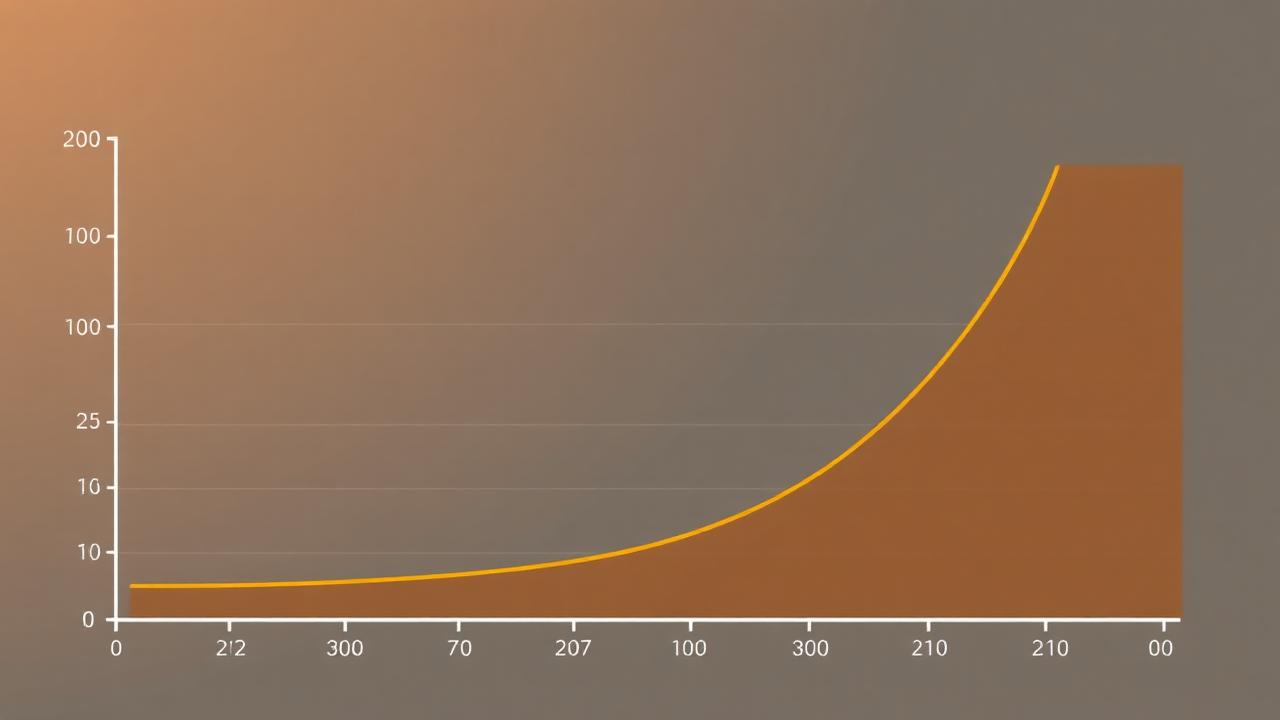
Almost every tirzepatide trajectory eventually flattens. The plateau is not a failure of pharmacology — it is the predictable interaction between an incretin signal, a defended body-weight set point and the slow physiology of energy balance. Understanding why the curve bends matters more than chasing the next milligram.
median time at which the SURMOUNT-1 weight curve approaches its asymptote on the 15 mg dose.
mean total body-weight change at 72 weeks on tirzepatide 15 mg in SURMOUNT-1.
approximate REE reduction observed after large voluntary weight loss in classic metabolic-ward studies.
the plateau is not one hormone — ghrelin, leptin, PYY, GLP-1 and the thyroid axis all shift.
Mean weight on tirzepatide declines steeply for the first six to nine months, then bends toward an asymptote that is dose-dependent and individual. The biology behind that bend is the same biology that defended the original baseline weight: a downward shift in resting energy expenditure, rising orexigenic drive, lean-mass loss and a slow renegotiation of defended fat mass. The plateau is information, not failure.
The plateau is the body negotiating a new set point. The pharmacology shifted weights on the scale; physiology is doing the rebalancing.
Defining the bend in the curve
In the SURMOUNT-1 trajectory the steepest weight loss occurs in the first four to six months, with the slope flattening progressively across the second half of the trial. By the final months the mean curve is approaching, but not yet at, an asymptote. Individual curves are highly variable — some participants continue losing weight at 18 months, others stabilise earlier.
A plateau is best defined statistically: a sustained period (typically eight weeks or more) where mean weekly weight change is within measurement noise. Day-to-day fluctuations of 1–2 kg are normal water and glycogen shifts and do not constitute a plateau.
The clinically meaningful question is not whether a plateau happens — it almost always does — but where it sits, how stable it is, and what happens to body composition around it.
Why the curve bends
| Layer | What the research describes |
|---|---|
| Adaptive thermogenesis | Resting energy expenditure falls more than predicted by lean-mass loss alone — the 'metabolic adaptation' described by Hall and Leibel. |
| Orexigenic drive | Ghrelin rises, leptin falls; central appetite signalling shifts toward hunger as fat mass declines. |
| Lean-mass loss | Roughly 20–40% of weight lost on incretins is lean mass; lower lean mass means lower basal metabolic rate. |
| Behavioural drift | Activity-related energy expenditure quietly declines; food-reward sensitivity may partially recover. |
| Pharmacodynamic ceiling | At maximum tolerated doses, receptor occupancy is near saturating; no further escalation is available. |
The plateau is the integration of these vectors. No single one explains it; each contributes a few percent of energy balance that, over months, halts the curve.
What the trial data actually show
SURMOUNT-1 trajectory
Mean curves on 5/10/15 mg diverge clearly after week 20; the highest dose continues to lose weight latest into the trial but still flattens.
SURMOUNT-4 withdrawal
Withdrawal of tirzepatide after 36 weeks produced substantial mean weight regain over the following 52 weeks, underscoring how much of the effect is signal-dependent.
Real-world cohorts
Observational cohorts show wider variance than trials, with plateaus arriving earlier in some and later in others; adherence and titration practices vary.
The SURMOUNT-4 pattern is the clearest demonstration that incretin pharmacology is doing ongoing work against a defended set point. When the signal is removed, the system returns toward — though usually not fully back to — baseline. This is the same pattern observed with semaglutide and with bariatric reversal. Body weight is regulated, and regulation persists.
The plateau therefore should not be read as the drug 'no longer working'. The drug is still working — it is holding a weight that physiology actively pulls upward. Removing the signal is what reveals how much work was being done.
What we know, what's still open
- Plateau exists: Documented across all phase 3 incretin obesity trials and replicated in real-world cohorts.
- Adaptive thermogenesis contributes: Well-characterised in metabolic-ward studies of voluntary weight loss; mechanistic role in incretin plateau plausible but less directly quantified.
- Body-composition shift: Lean-mass loss component documented across multiple imaging substudies.
- Reversibility on withdrawal: Established by SURMOUNT-4 and analogous semaglutide STEP-4 data.
- Optimal management: Open question — exercise prescription, protein intake, dose strategy are areas of active research.
Frequently asked
Is a plateau a sign the drug stopped working?
No. The drug continues to hold weight at a level the body actively defends. Removing the signal usually leads to regain — the cleanest evidence pharmacology is still doing work.
Does going up a dose break the plateau?
Sometimes, often modestly. Each titration step buys further mean loss in trials, but the curve still bends. Set-point defence is not abolished by dose alone.
Does resistance training change the picture?
Mechanistically yes — it should preserve lean mass and therefore resting metabolic rate. Direct interventional data in incretin cohorts are still maturing.
What about diet composition?
Higher protein intake is the most consistent recommendation in current clinical literature, primarily for lean-mass preservation rather than additional weight loss.
Where to read further
- • Jastreboff AM et al. Tirzepatide once weekly for the treatment of obesity. NEJM 2022;387:205–216 (SURMOUNT-1).
- • Aronne LJ et al. Continued treatment with tirzepatide for maintenance of weight reduction in adults with obesity. JAMA 2024 (SURMOUNT-4).
- • Rosenbaum M, Leibel RL. Adaptive thermogenesis in humans. Int J Obes 2010;34:S47–S55.
- • Hall KD et al. Quantification of the effect of energy imbalance on body weight. Lancet 2011;378:826–837.