
GLP-1 and Lean Mass: The Muscle-Preservation Question
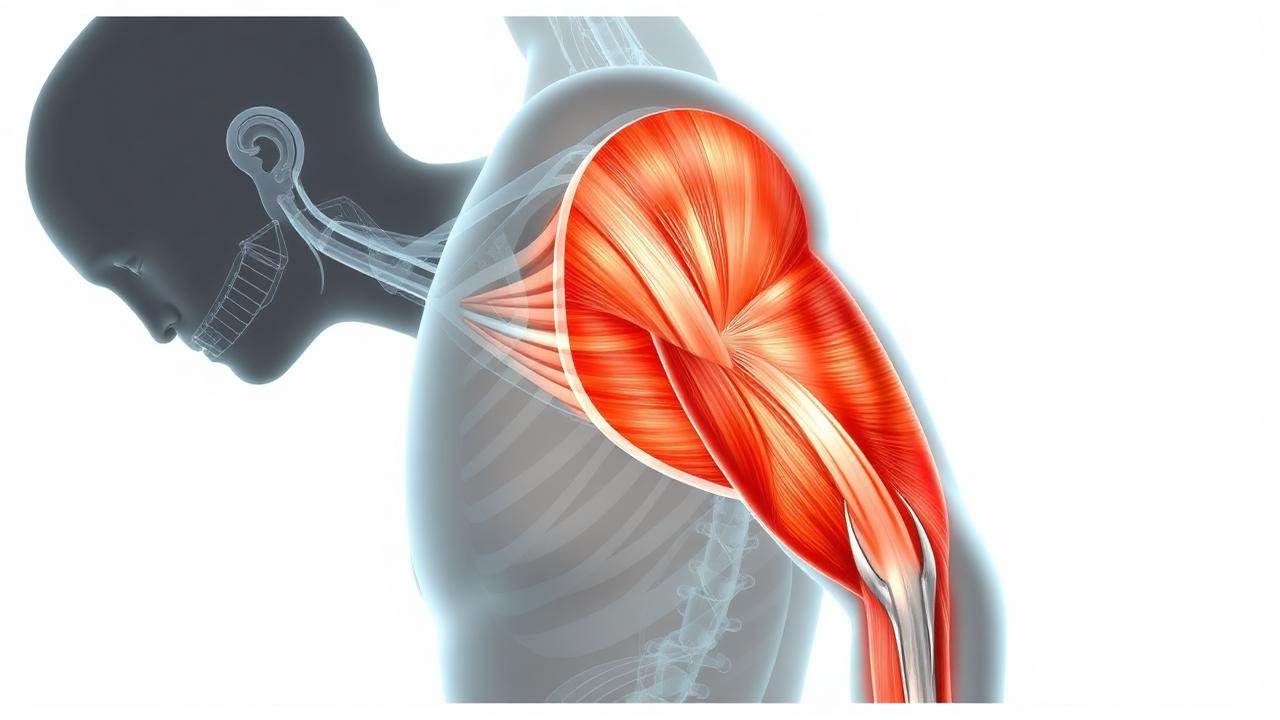
Body weight is a single number. Body composition is two. A meaningful fraction of weight lost on GLP-1 and dual incretin therapy is lean mass — and the research on how to bend that ratio is younger than the headlines.
approximate share of weight lost on incretins that is lean (non-fat) mass in DXA substudies.
semaglutide DXA substudy reported ~39% of mass lost was lean tissue.
protein intake range commonly cited in weight-loss literature for lean-mass preservation.
resistance-training frequency typically used in preservation-focused trials.
All meaningful weight loss includes lean-mass loss — this is a feature of energy balance, not a flaw of incretins specifically. Semaglutide and tirzepatide substudies report a 20–40% lean-mass fraction of total loss, broadly consistent with caloric restriction and bariatric surgery. The interventional evidence for resistance training plus higher protein intake to bend that ratio is older and well-replicated outside incretin pharmacology; direct trials within incretin cohorts are emerging.
Lean mass is not an aesthetic concern. It is metabolic infrastructure, strength reserve, and the largest determinant of resting energy expenditure.
What the imaging substudies show
DXA (dual-energy X-ray absorptiometry) is the standard tool used in trial substudies to partition weight change into fat and lean compartments. MRI and CT add resolution on regional muscle and visceral fat.
Across published substudies of semaglutide and tirzepatide, the lean-mass fraction of total weight lost sits in roughly the 20–40% range. The exact figure varies by population, baseline composition, age and trial duration.
Important nuance: 'lean mass' includes water, organ tissue and skeletal muscle. Not all lean-mass loss is muscle loss. Hydration shifts dominate the first weeks; sustained loss across months is more meaningfully tissue.
Why lean mass falls
| Layer | What the research describes |
|---|---|
| Caloric deficit | Any sustained energy deficit triggers proteolysis as a substrate source; incretins create a deficit primarily via reduced intake. |
| Reduced protein intake | Appetite suppression often reduces absolute protein intake; relative protein intake (g/kg) may fall as weight falls. |
| Reduced mechanical loading | Lower activity levels — common during initial GI side effects — accelerate disuse atrophy. |
| Anabolic hormone milieu | Insulin, testosterone, IGF-1 axis shifts during sustained loss influence net protein balance. |
| Age | Older adults lose a higher proportion of lean mass for any given total loss. |
None of these mechanisms are unique to incretins. They are the classic biology of caloric restriction expressed through a new pharmacological driver.
What the preservation literature actually shows
Resistance training
Strongest evidence base outside incretin trials. Multiple meta-analyses show resistance training during caloric deficit preserves lean mass and often shifts the loss ratio meaningfully.
Higher protein intake
Consistent recommendation 1.2–1.6 g/kg/day in weight-loss literature; some clinicians target the higher end during incretin-driven loss given appetite suppression.
Combined
Combination of resistance training plus elevated protein is the most consistent strategy; effect sizes in non-incretin caloric-deficit trials are reproducible.
Direct interventional trials of resistance training + protein within incretin cohorts are an active research area but the evidence base is still smaller than the underlying body-composition literature. The most defensible position is that the principles transfer.
What does not appear to work, on current evidence: passive interventions, hormone tweaks without training stimulus, or relying on the pharmacology alone to preserve composition.
What we know, what's still open
- Lean-mass loss happens on incretins: Well-documented across DXA substudies.
- Resistance training preserves lean mass during deficit: Strong evidence outside incretin context; replicating within incretin trials.
- Higher protein supports preservation: Strong evidence in general weight-loss literature.
- Within-incretin interventional data: Smaller, growing — major area of current trials.
- Long-term functional outcomes: Open question — strength, falls, sarcopenia in older adults on long-term incretins.
Frequently asked
Is incretin-driven lean-mass loss worse than diet?
Substudy fractions are broadly comparable to caloric-restriction literature. The incretin context is not uniquely harmful — but the speed and magnitude of loss raises the stakes.
Does the lean-mass loss recover?
On withdrawal weight regain is largely fat; lean recovery is slower and incomplete. This argues for preservation during loss, not recovery after.
How much protein is enough?
Weight-loss literature converges on 1.2–1.6 g/kg/day. Individual targets depend on age, kidney function and training stimulus — clinical question for the treating team.
Does cardio count?
Cardiovascular exercise is health-protective but does not preserve lean mass during a deficit the way resistance training does.
Where to read further
- • Wilding JPH et al. STEP 1 trial. NEJM 2021;384:989–1002 (and DXA substudies).
- • Jastreboff AM et al. SURMOUNT-1. NEJM 2022;387:205–216.
- • Cava E et al. Preserving healthy muscle during weight loss. Adv Nutr 2017;8:511–519.
- • Longland TM et al. Higher protein intake during caloric deficit. AJCN 2016.