
AOD-9604: The GH Fragment Fat-Loss Story
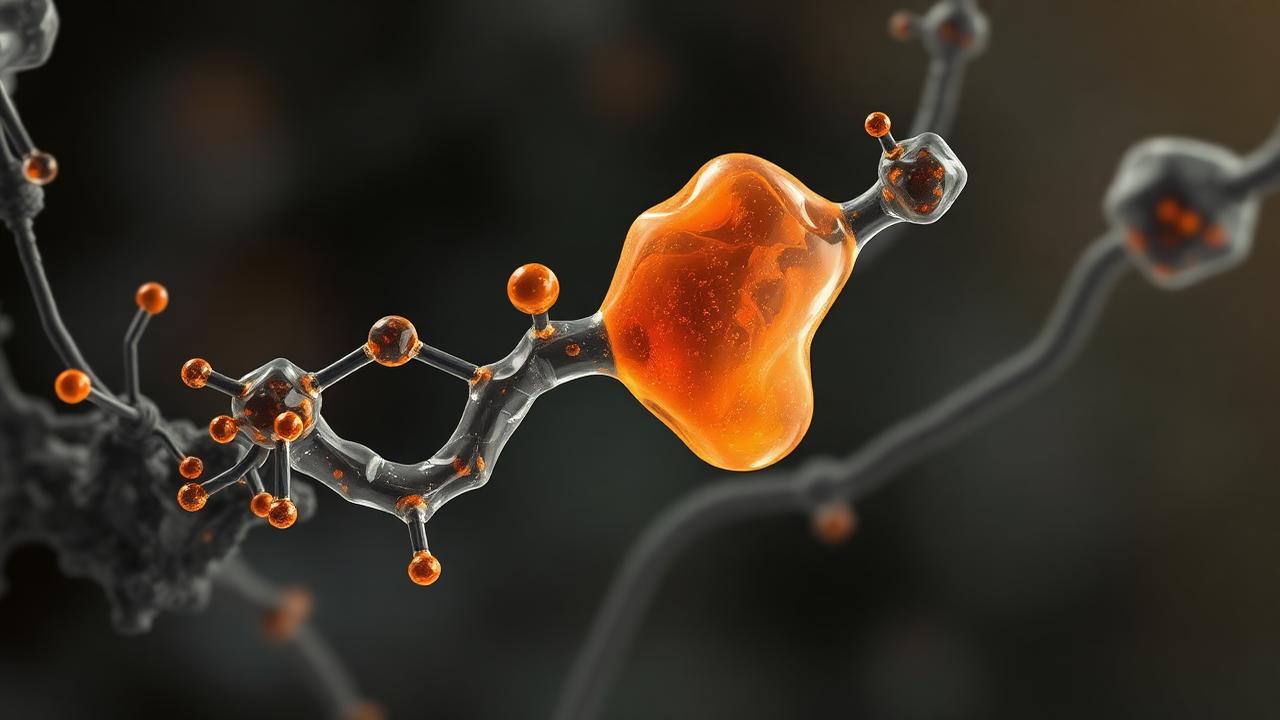
AOD-9604 is a synthetic fragment of growth hormone — the C-terminal 176-191 amino acids — marketed for fat loss on the rationale that it carries the lipolytic effect without the metabolic side effects of full GH. The animal mechanism is real; the published human trial is the part most marketing omits.
AOD-9604 is a 16-amino-acid fragment corresponding to GH residues 176-191.
lipolytic effects documented in animal adipose tissue models.
the principal published human RCT (Heffernan et al.) reported no significant weight or fat loss vs placebo.
approved as a food ingredient in Australia at limited dose; not approved as a medicine.
AOD-9604 is a 16-amino-acid synthetic peptide based on the C-terminal region of growth hormone. Animal studies report lipolytic effects in adipose tissue without classical GH metabolic burden. The principal published human RCT — Heffernan et al., adults with obesity — found no significant weight or fat loss vs placebo at the doses tested. The peptide remains in cosmetic and supplement use, but the clinical fat-loss claim is not supported by the published human evidence.
Animal mechanism without human outcome is a partial story. The negative human RCT is the part most marketing leaves out.
What it is
AOD-9604 (anti-obesity drug 9604) is a 16-amino-acid synthetic peptide corresponding to residues 176-191 of human growth hormone. It was developed at Monash University in Australia.
Mechanistically, animal studies attribute lipolytic effects in adipocytes to this C-terminal region of GH, distinct from the metabolic-burden effects (insulin resistance, glucose handling) associated with full GH.
The marketing claim is therefore: GH-like fat loss without GH-like side effects. The peptide has been studied in animals, in cell models, and in at least one substantial published human RCT.
Animal vs human
| Layer | What the research describes |
|---|---|
| Animal lipolysis | Reported lipolytic effect in rodent adipose tissue models. |
| Animal energy expenditure | Some studies suggest modest energy-expenditure increase. |
| GH receptor | Does not act via the classical GH receptor — distinguishes it from full GH pharmacology. |
| Human PK | Oral and injectable forms studied; absorption profiles differ. |
| Human efficacy | Heffernan et al. RCT in obesity: no significant weight or fat loss vs placebo at doses tested. |
The animal-to-human translation gap is the central issue. Mechanism in adipose tissue did not translate to a clinical weight effect in the published trial.
What the human evidence actually shows
Heffernan et al. (human RCT)
Randomised placebo-controlled trial in adults with obesity. No significant difference in weight or body composition between AOD-9604 and placebo arms at the doses tested.
Cosmetic / topical use
Some topical and cosmetic applications exist; data on efficacy at these uses are limited and largely promotional.
Regulatory status
Australian GRAS approval as food ingredient at very low doses; not approved as a medicine in major jurisdictions.
The honest reading is that the published human trial did not support the fat-loss claim. Subsequent commercial development has emphasised other applications (joint, cosmetic) where the evidence is even thinner.
This is a useful counter-example to a common pattern: strong animal mechanism that did not translate to a clinical effect when properly tested in humans. The animal data are real; the human outcome is the part that decides clinical relevance.
What we know, what's still open
- Animal lipolysis: Supported.
- Human weight/fat loss: Not supported by the principal published RCT.
- Mechanism (non-GHR): Distinct from full GH pharmacology.
- Regulatory approval (medicine): None in major jurisdictions.
- Other indications: Joint and cosmetic claims with limited evidence.
Frequently asked
Does it cause GH-like side effects?
Animal data suggest not, and limited human PK data are consistent. But absence of side effect is not evidence of efficacy — the principal human RCT was negative for the headline weight claim.
Why is it still sold?
Cosmetic and supplement market positioning. Australian GRAS food-ingredient status at low doses is sometimes cited in marketing; this is not equivalent to medicinal approval.
Is it safe?
Short-term safety appears favourable in published studies. Long-term safety data are limited.
Is it WADA-prohibited?
GH fragments fall within the peptide hormone / growth factor category; check the current WADA Prohibited List for context.
Where to read further
- • Ng FM et al. Metabolic studies of a synthetic hGH 177-191 fragment.
- • Heffernan M et al. The effects of human GH fragment 176-191 on lipolysis. JCEM 2001.
- • Stier H et al. Safety and tolerability of AOD-9604.